Why Madison rail jobs look like leftover builder millwork
A typical Madison two-story plan gets first-floor hardwood while the stair guard stays what the builder left: a skinny oak-look cap, painted newels that do not match the plank, and balusters that read as a catalog kit. Village of Providence, Clift Farm, Town Madison, and the newer tracts west of County Line Road all share that leftover-builder pattern. The floor is already a finished interior. The rail is still a job-site afterthought.
That is a different problem from a Twickenham or Five Points stair with original oak gone gray at the nosing. In Madison the stringer is usually sound and the opening is already close to a modern rise and run. The quote is a rail that belongs with the hardwood — or a rail plus a carpet-to-hardwood makeover when the treads are still carpet. We do not sell a welded outdoor package and call it a staircase railing.
Wood handrails and newel posts on Madison stairs
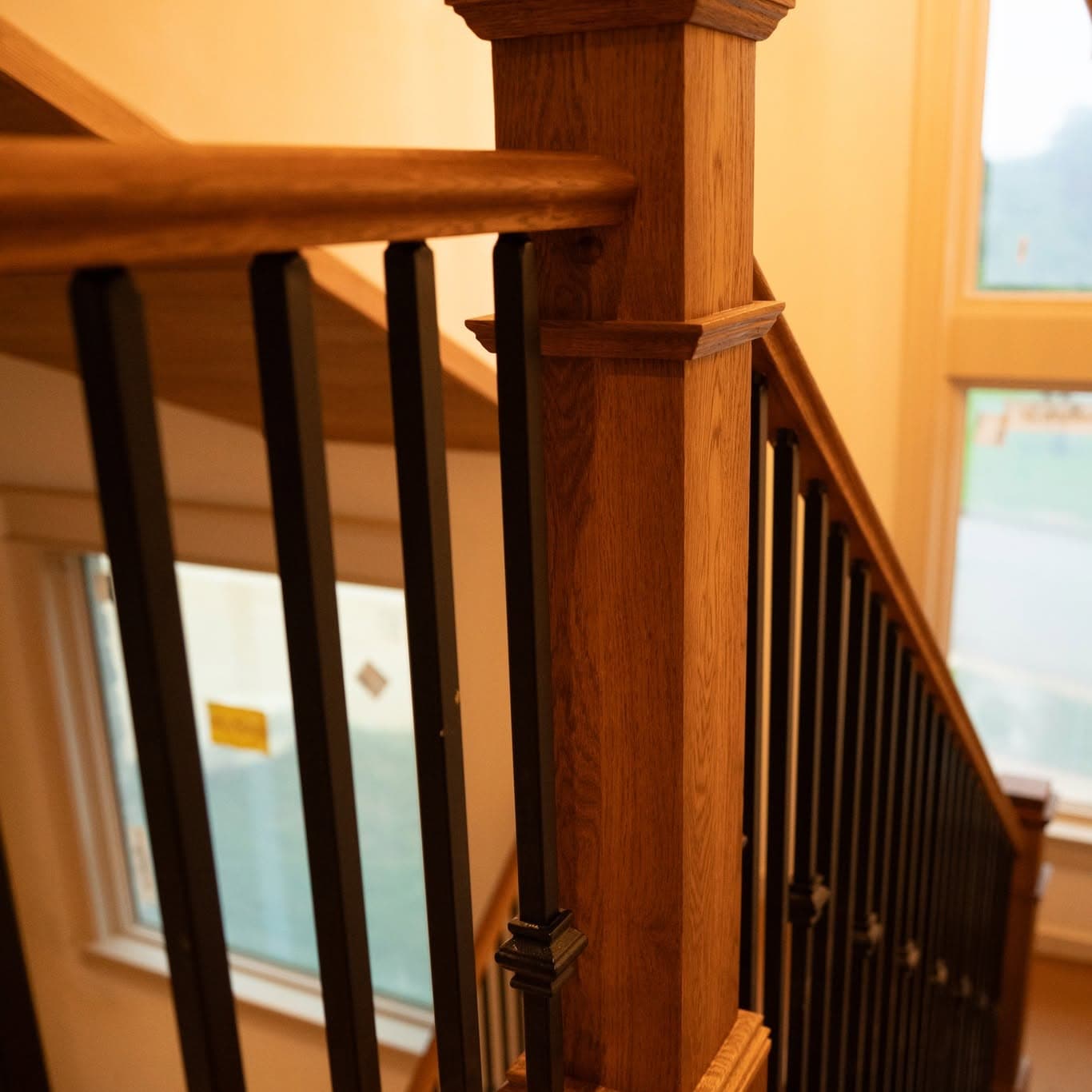
The backbone of a Madison interior rail is the wood. We set square newels plumb at the base, the landing, and the top, then run a continuous wood handrail that follows the pitch instead of breaking into short kit sections. An oak cap stained to the adjoining foyer plank reads as one millwork job. Painted newels work when the rest of the trim is painted — common on newer Madison interiors that kept white casing and went dark on the floor.
Newel location matters more than the catalog photo. Builder newels are often undersized and set where the framing allowed, not where a handrail wants to land. We check those points on site in Madison before we commit a layout. If a newel has to move, that is written into the estimate. If the existing newels can stay and only the cap and balusters change, we say so. You are not buying a full tear-out because a metal shop only sells a welded run.
Balusters, including matte black metal balusters
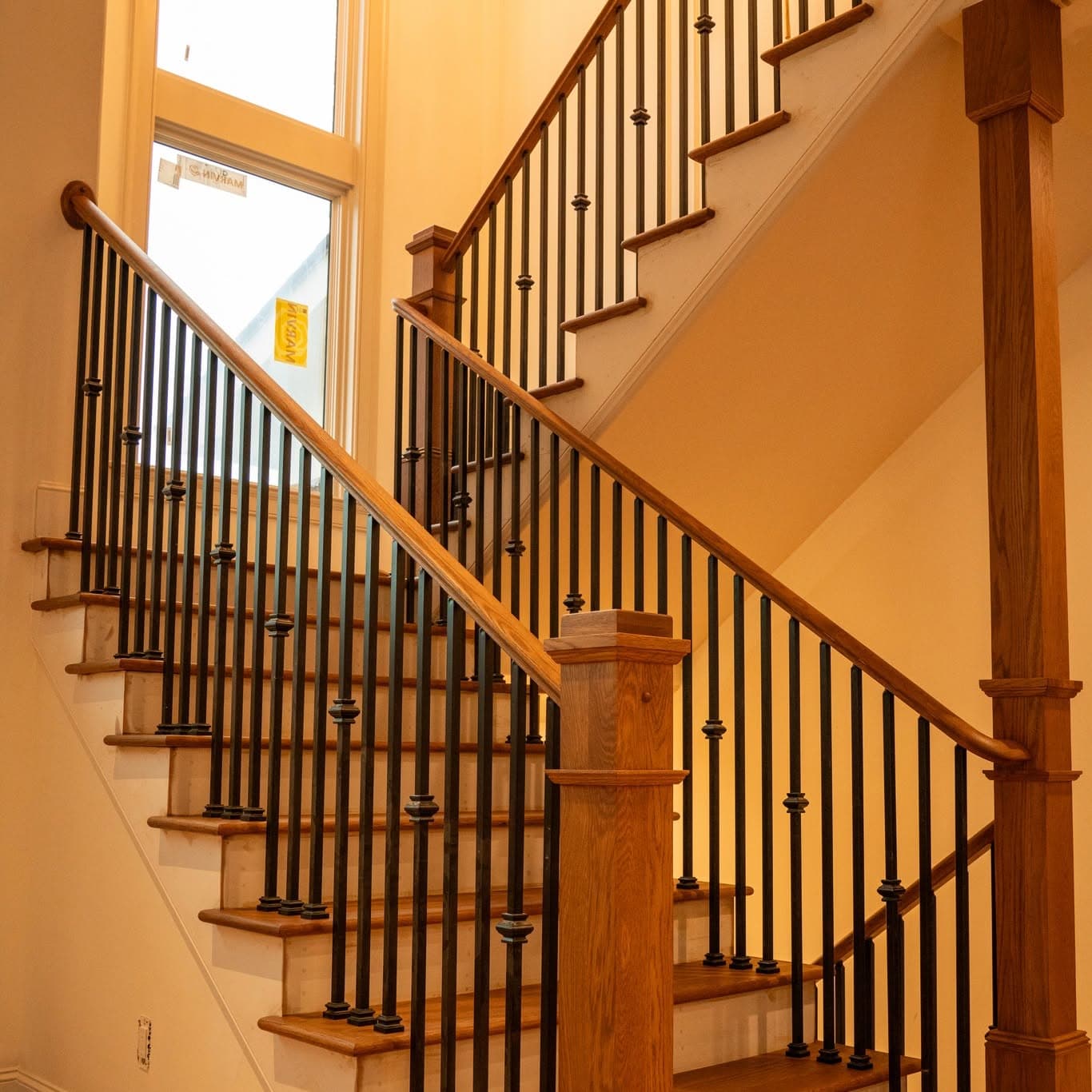
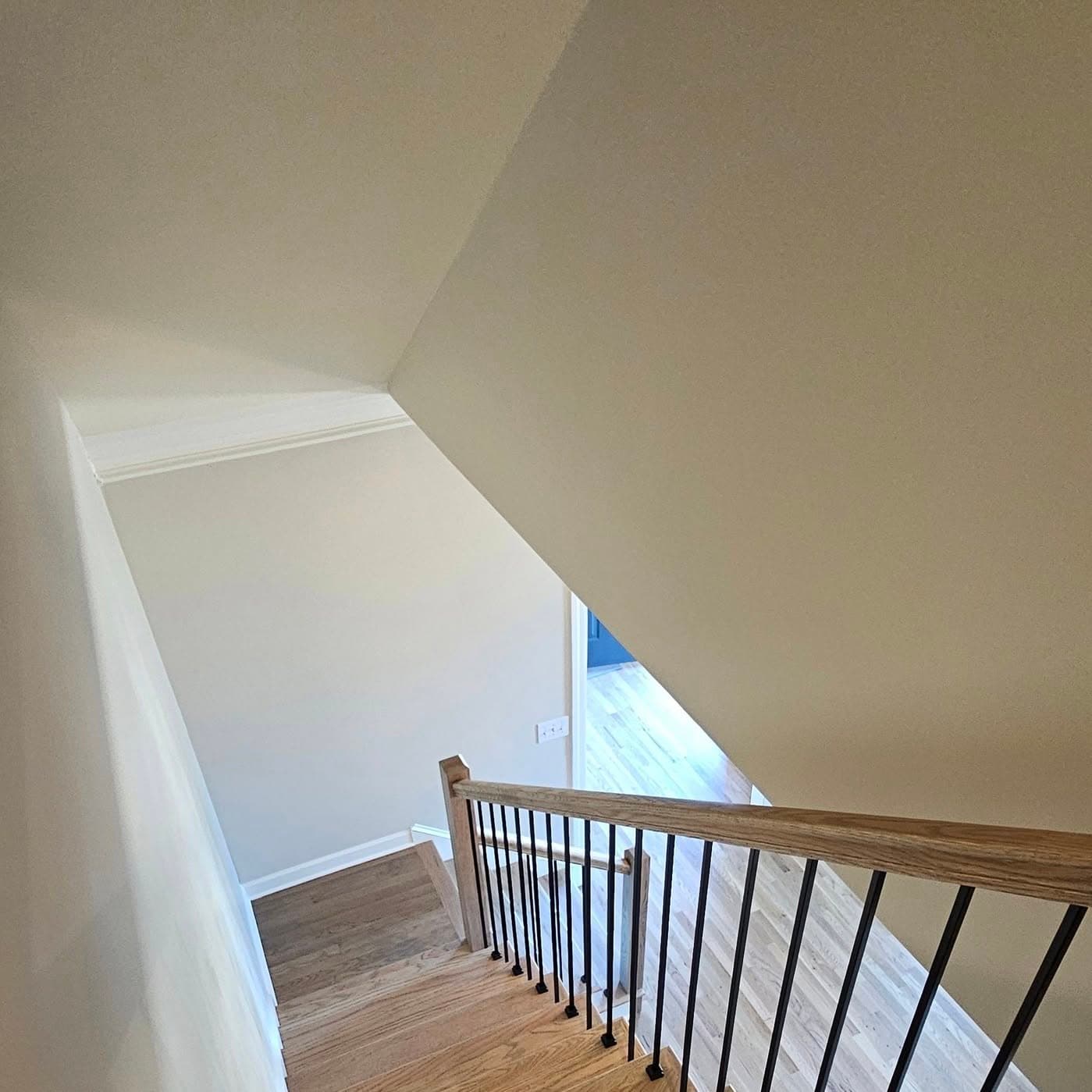
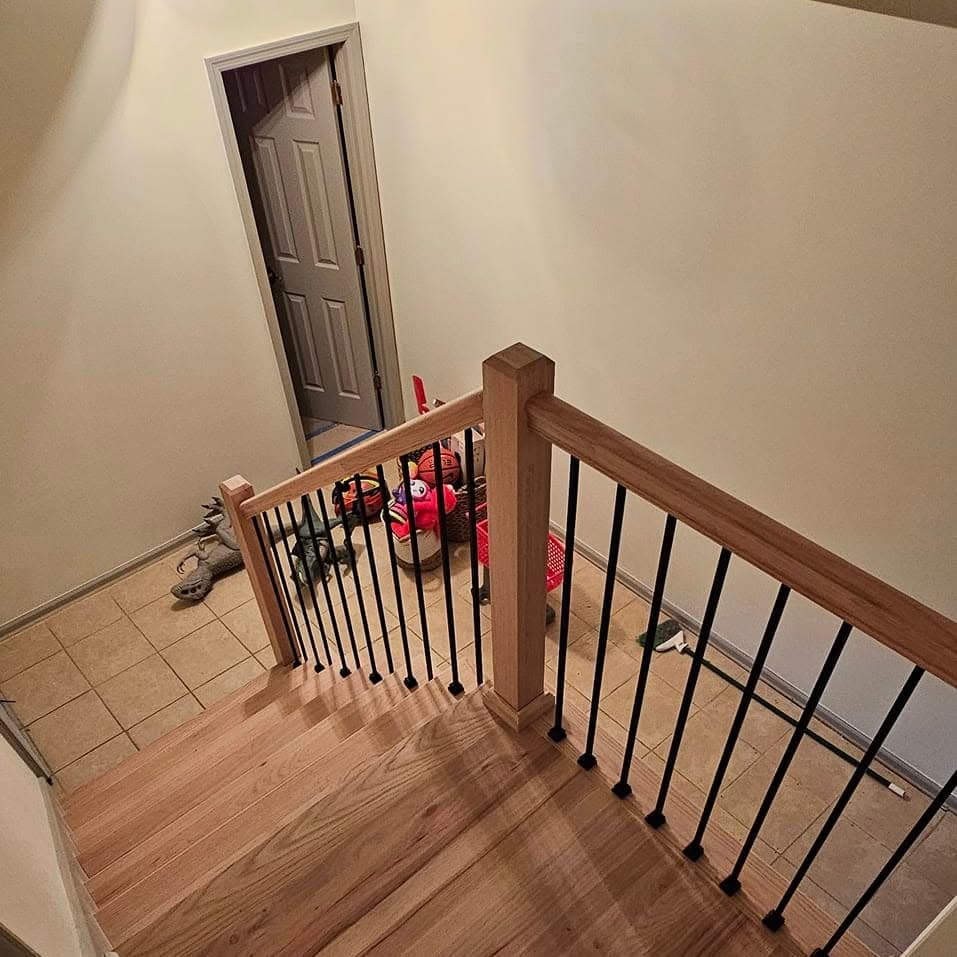
Wood balusters match existing millwork and are the quieter Madison ask — especially in houses that already have oak casing or a stained interior door package. Matte black metal balusters with that same wood handrail are the more common request on newer two-story builds. The mixed look is interior carpentry: metal as the infill, wood as the structure you hold. It is not a fabricated steel stair.
We sample both against your actual treads and floor under your light. A chip card in a showroom does not tell you whether the black reads cold next to a honey oak or belongs with a gray-brown plank. Madison stain matching is the same work we do on the treads. The rail and the walking surface should look like one crew left them.
Interior rail replacement on stairs you already walk
Most Madison railing work is replacement, not a new stair. Old turned spindles come out. A builder rail that never matched the hardwood comes out. We keep the stringer when it is sound, protect the adjoining floor, and install the new guard in a lived-in house. If the treads are already hardwood but the rail is the leftover, the job can be rail-only. If the treads are still carpet, we convert them in the same visit so you are not coordinating a fabricator after the oak goes in.
That pairing is the usual Madison County quote: carpet off, solid treads and risers on, newels and a handrail set before we leave. Harvest ZIP 35758 is the next town on this same route if that is the closer name on the form. We come to the house. There is no public shop address. A rail-only Madison job is still a full on-site measure — leftover builder newels hide surprises in the landing return even when the treads already look finished.
Handrail height and spacing, in general terms
This page is not a code manual for your Madison opening. As general residential interior guidance, handrails usually sit in the 34-to-38-inch height range measured from the nosing, and baluster spacing is set so a four-inch sphere cannot pass. Exact height and spacing are confirmed on the written estimate at the house, because pitch, landing returns, and existing newel locations vary — including on builder stairs that look identical from the street.
We do not publish a height chart or a price list. A Madison rail over a two-story foyer is a different measure than a short run between floors in a narrower hall. Josh Templet writes the number after he sees the opening, not from a search result.
How a Madison railing job runs
The visit starts with the opening, the existing newels, and the floor the cap has to meet. We decide rail-only versus makeover-plus-rail on site. You get a free written estimate before a newel is set. Containment is advanced and virtually dustless because Madison stairs sit in the middle of an occupied house. Then we install, stain on your wood, and walk the completed guard with you.
Licensed and fully insured. Owner-operated out of Alabama Hardwood Restoration. Interior hardwood only — we do not weld outdoor steel, deck rails, or commercial metal packages. If a Madison search for staircase railings or a custom staircase keeps sending you to a metal shop, that is a different trade. Handrails, newels, and balusters are also available as stair parts with or without installation if you are coordinating other interior work. Call (256) 665-2161.
Finished interior stair railings
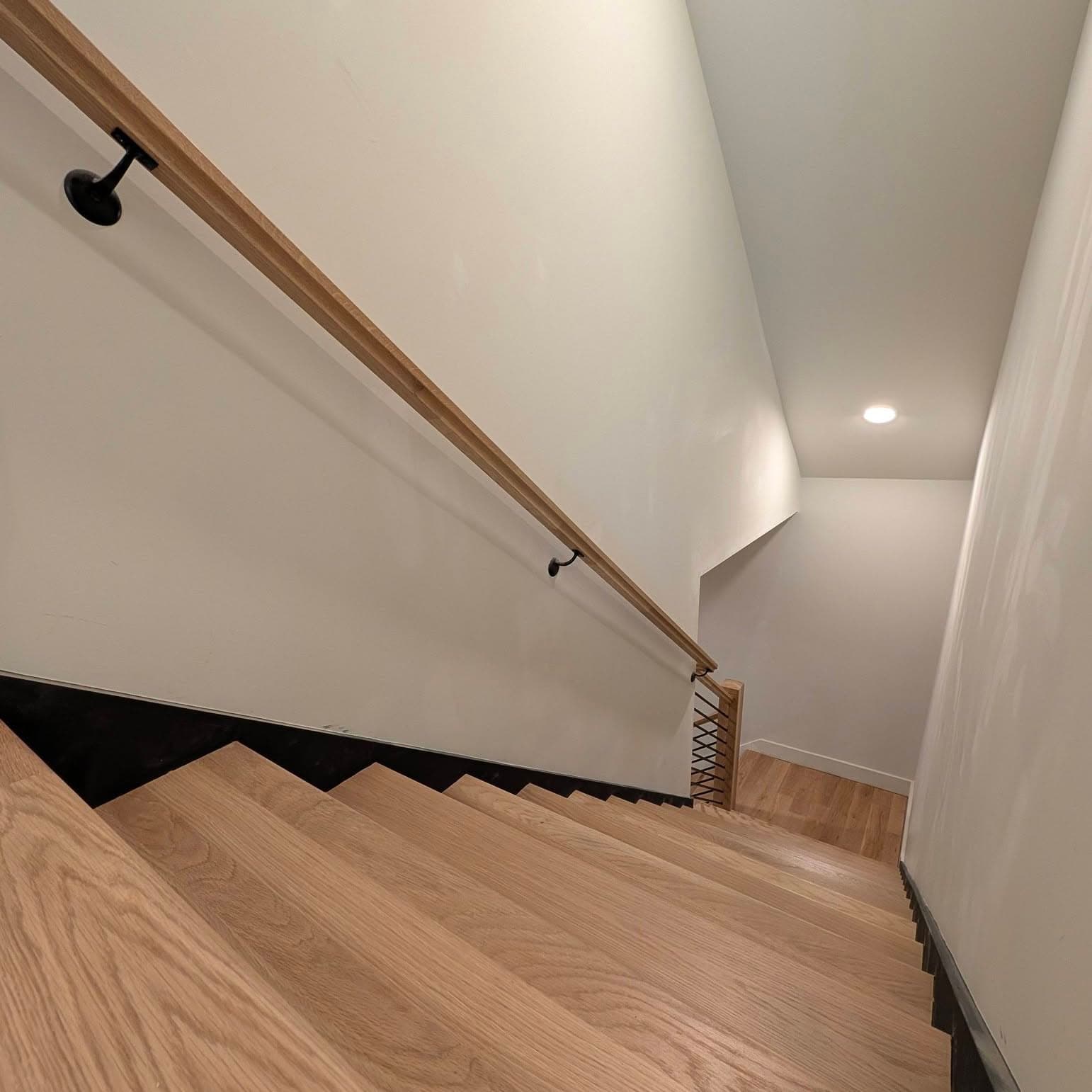
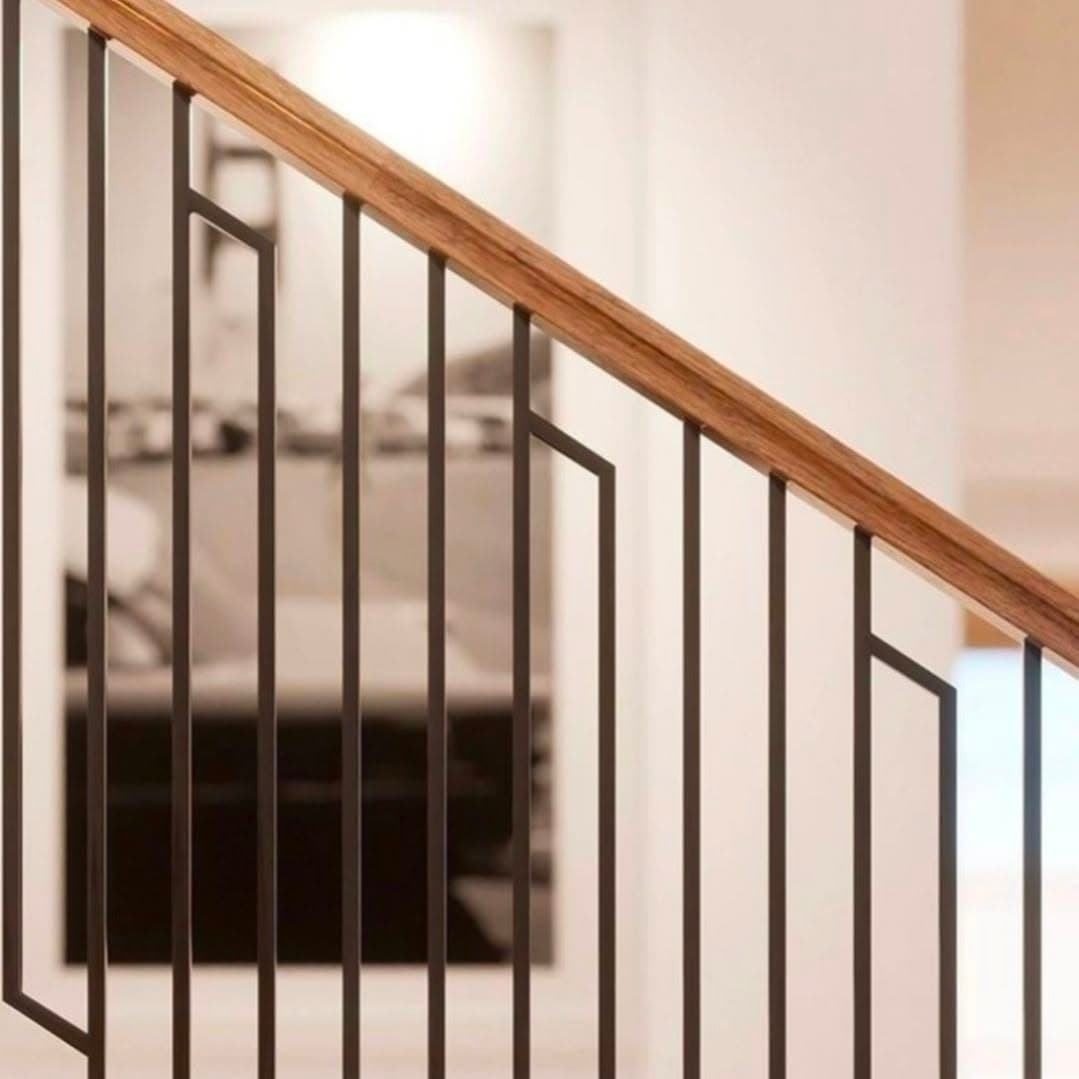
Gallery photos of wood handrails, newels, and wood or matte black metal balusters — the interior railing work we quote in Madison. They are not labeled as a named Madison street. See the stair gallery.
Madison stair pages
More on this city: stair work in Madison. Hub pages: staircase railings, stair parts with or without installation, and a free estimate. Call (256) 665-2161.